Don't Forget to Flush
|
Don't Forget to Flush |
|

|
Brake fluid absorbs moisture from the air (it is hygroscopic). Over time, enough water accumulates in brake fluid to cause corrosion and/or reduce stopping power. Water in hot brake fluid turns to steam which compresses and cannot maintain hydraulic pressure. The brake pedal goes soft on a long downgrade or during a panic stop. Flushing the brake fluid is a good idea and something a DIYer can do on most cars. A brake flush is a super-duper brake bleed. Rather than just bleeding out only enough brake fluid to get the air out of the system, you take all or at least most of the old brake fluid out. Handy new brake bleeder/flusher tools make it easy to quickly do the job single handedly. Last weekend, my daughter and I used the K TOOL Vacuum Pump in the photo to suck the brake fluid out of our 1992 Dodge van. We opened the bleeder fitting on the brake caliper or drum brake wheel cylinder, pushed the pump’s rubber adapter onto the fitting, and gave the handle a few squeezes to build a vacuum. The pump’s four ounce (118 ml) bottle filled up quickly. We steadily added new brake fluid to the master cylinder so it never ran dry. At each wheel, it was time to stop when the old muddy colored brake fluid was gone and new brake fluid started coming through the bleeder fitting. To prevent air from entering the system, we closed the fitting while there was still a vacuum in the pump.
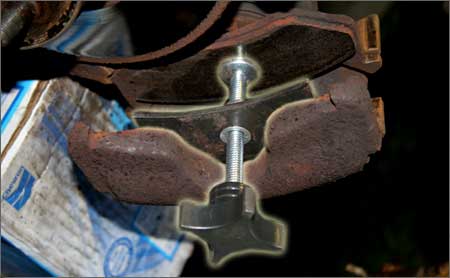
The pump came with general instructions. More specific brake bleed/flush instructions might be found in a vehicle’s specific repair manual. Our K TOOL pump and its attached vacuum gauge can also be used to test EGR, PCV and several other vacuum based automotive systems. While flushing, I also replaced the van’s brake pads. My new Lisle Disc Brake Piston Tool shown in the photo made compressing the caliper piston much faster and easier on my hands. I feel silly thinking of all the times in the past I wrestled with a big C-clamp to compress the pistons. The first go around with a C-clamp almost never resulted in quite enough piston compression to make room for the new brake pads. Please note both the vacuum pump and brake piston tool were products I purchased and sincerely liked rather than freebie tools from the manufacturers.
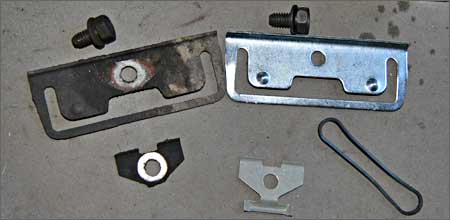
And finally, the van’s brake job reminded me what a good idea it is to get a Brake Hardware Kit along with new brake pads or brake shoes. This time it would not have even been an option to reuse some of the anti-rattle clips, o-rings and other parts that came in the hardware kit. Parts were badly corroded, broken or completely missing!
|