
High Performance Brake Fluid Explained

High Performance Brake Fluid Explained
Brake fluid is the one component in your braking system that most drivers never think about — until something goes wrong. Yet it is the hydraulic lifeline that transfers every pound of pressure from your foot to the calipers, pads, and rotors. In a high-performance application, whether you drive a sports car on weekend track days or tow a heavy trailer through mountain passes, the fluid you choose can mean the difference between confident, repeatable stops and a pedal that fades into the floor. This guide explains what high-performance brake fluid actually is, how it works, and how Canadian drivers should choose and maintain it.
What Brake Fluid Actually Does
Hydraulic braking relies on a simple principle: liquids are essentially incompressible. When you press the brake pedal, a master cylinder pushes fluid through steel and rubber lines to the calipers, which clamp the pads against the rotors. Because the fluid does not compress, the force you apply is multiplied and transmitted almost instantly to all four corners of the vehicle.

That role imposes three demanding requirements on brake fluid:
- It must remain a liquid across extreme temperatures. Rotors and pads can exceed 600°C (over 1,100°F) during hard use, and the calipers get hot as a result. The fluid inside must not boil.
- It must resist compression and viscosity change. A pedal that feels spongy usually means vapour — not liquid — is in the system.
- It must protect the system internally. Modern fluid contains additives that inhibit corrosion in the lines, calipers, and ABS pump, and lubricate seals.
Ordinary driving rarely stresses these properties. Performance driving does, and that is where fluid specification becomes critical.
Understanding DOT Ratings and Dry vs. Wet Boiling Points
Brake fluid is classified under the U.S. Department of Transportation (DOT) system, which grades fluid primarily by boiling point and chemical base.

The common grades
- DOT 3: Glycol-based, the traditional standard for passenger cars. Minimum dry boiling point around 205°C (401°F), wet around 140°C (284°F).
- DOT 4: Also glycol-based but with a higher specification — roughly 230°C (446°F) dry and 155°C (311°F) wet. It offers a meaningful jump in heat resistance while remaining compatible with most street systems.
- DOT 5.1: Glycol-based like DOT 3 and 4, but with the highest mainstream wet boiling point requirement, around 180°C (356°F). Despite the "5" in the name, it is not the same chemistry as DOT 5.
- DOT 5: Silicone-based. It does not absorb water, which appeals to owners of rarely driven classics, but it is generally unsuitable for ABS-equipped or hard-driven performance cars because it can aerate and is not compatible with glycol fluid.
Why "wet" boiling point matters most
Brake fluid is hygroscopic — it absorbs moisture from the air over time. That is actually a deliberate design choice: keeping water dissolved in the fluid prevents it from pooling and corroding components. The downside is that water lowers the boiling point dramatically. A fluid that boils at 230°C when fresh might boil near 155°C after a couple of years of service in a humid climate.
This is why the wet boiling point is the number that should drive your maintenance decisions. Fresh fluid out of the bottle performs at its dry rating, but the fluid in your calipers is always somewhere between the two figures.
What Separates "High Performance" Brake Fluid
A high-performance brake fluid is engineered for vehicles that generate serious heat and demand a consistent pedal. Compared with standard fluid, performance formulations typically offer:
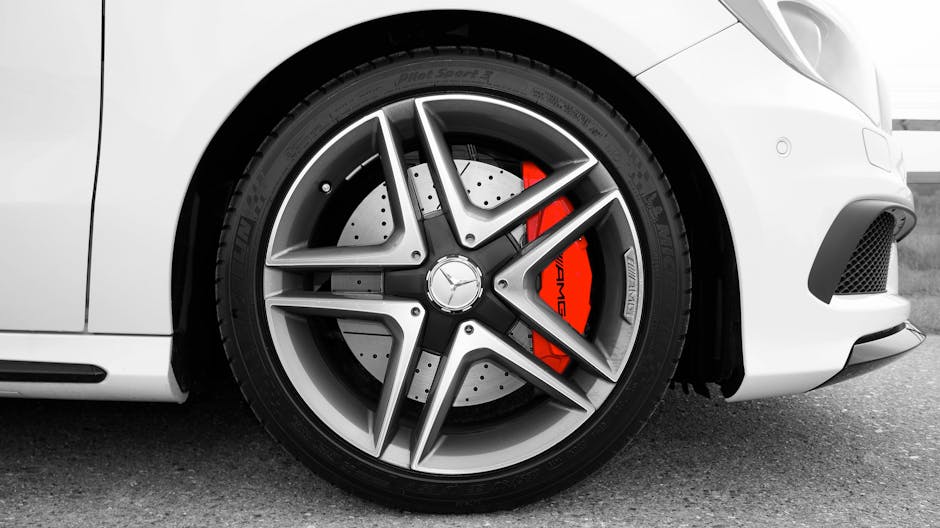
- Higher dry and wet boiling points. Racing-oriented fluids can exceed 300°C (570°F) dry. These numbers buy margin during repeated hard stops, long descents, or track sessions.
- Better resistance to compressibility under heat. Some premium fluids maintain a firmer pedal at race temperatures, where standard fluid begins to feel vague.
- Stable viscosity across temperature swings. This matters for ABS and stability-control systems, which rely on fluid moving quickly through small valves. A fluid that thickens excessively in a Canadian winter can slow ABS response.
- Robust corrosion and seal protection. Performance fluid still has to live in a daily-driven system for years, so additive packages are formulated to protect aluminium calipers, steel lines, and master cylinder internals.
A note on racing fluid for street cars
Many dedicated racing fluids have extremely high dry boiling points but modest wet boiling points, and some are designed for frequent replacement. They also tend to absorb moisture faster. For a street-driven performance car in Canada, a high-quality DOT 4 or DOT 5.1 fluid is often the smartest choice: it delivers far more heat capacity than the factory fill while remaining practical for a vehicle that sees rain, snow, and multi-year service intervals.
Brake Fade, Spongy Pedals, and the Real-World Symptoms
When fluid overheats, it boils. The gas that forms is compressible, so instead of transmitting force, it absorbs it. The driver feels a pedal that sinks further with each application while braking force drops — a phenomenon known as fluid fade. Repeated hard braking on a mountain descent or a race track can trigger it in minutes.
Signs that your fluid needs attention include:
- A pedal that feels soft, long, or spongy
- Braking performance that deteriorates after several hard stops
- Dark, murky fluid in the reservoir instead of clear amber or pale yellow
- A brake warning light or ABS behaviour you have not seen before
- A fluid level that drops without an obvious leak, suggesting internal moisture or wear
Note that old fluid is a safety issue long before it reaches the racetrack. Contaminated fluid can corrode ABS valve bodies and caliper pistons, leading to expensive repairs. Regular flushing is cheap insurance.
Choosing the Right Fluid for Your Vehicle and Climate
Canada adds two considerations to the usual performance calculus: extreme cold and heavy seasonal moisture from freeze-thaw cycles and road splash. Here is a practical framework.
Daily drivers and family vehicles
Stick with the manufacturer's specified DOT grade — usually DOT 3 or DOT 4. Replace it on schedule, typically every two to three years. Even a commuter benefits from fresh, moisture-free fluid because pedal consistency in winter and confidence on a rainy highway come down to the same physics.
Sports cars, turbocharged cars, and spirited drivers
Upgrade to a quality DOT 4 or DOT 5.1 fluid. The wet boiling point margin is where you gain real-world safety during aggressive driving, and the improved viscosity stability helps ABS systems respond cleanly in cold weather. For a deeper look at how rotors and pads interact with that heat, see our guide to slotted brake rotors.
Trucks, towing, and heavy-duty use
Towing and hauling generate sustained brake heat, especially on long descents. Vehicles in this category often benefit from DOT 4 fluid along with fresh calipers, quality rotors, and pads rated for elevated temperatures — the same hardware principles covered in our truck brake upgrade Canada guide. Fluid is only one part of the thermal equation — but it is the part that fails first when fluid is ignored.
Track and competition use
Serious track drivers should choose a racing-grade fluid matched to their braking system and bleed it before every event. The key is to pair that fluid with a braking setup designed for the heat, including rotors and pads that can take the abuse. For an independent look at how physical activity and heat affect human performance — a useful parallel when thinking about sustained stress on components — see the American College of Sports Medicine.
Bleeding, Flushing, and Maintenance Best Practices
Even the best fluid underperforms if there is air in the system or the old fluid is left behind. A few principles apply to virtually every vehicle:
- Flush, don't just top up. Adding fresh fluid to a reservoir full of old, moisture-laden fluid does almost nothing for boiling point. You need to push new fluid through the entire circuit, including the ABS unit.
- Bleed in the correct order. Usually starting at the caliper farthest from the master cylinder and working closer, following the manufacturer's sequence.
- Keep fluid sealed and fresh. An open bottle absorbs moisture within days. Buy the size you will use and seal it tightly.
- Never mix chemistries. Glycol and silicone fluids are not compatible. Mixing the two can destroy seals and create a dangerously unpredictable system.
- Match fluid to the rest of the system. High-performance fluid works best with calipers, lines, pads, and rotors that can handle the same heat. A brake system is only as strong as its weakest thermal link.
For drivers in Canada, the practical intervals look like this: flush every two years for a normal commuter, annually for a performance car that sees spirited driving, and before each track event for competition use. If you are unsure what is currently in your system or when it was last changed, assume it is due. When bleeding, always follow the torque and sequence guidance for your setup, such as that found in our big brake kit installation guide.
Where Fluid Fits in an Upgraded Brake System
Enthusiasts sometimes treat brake fluid as an afterthought next to big brake kits, drilled or slotted rotors, and high-friction pads. In reality, the fluid is what makes all of those upgrades usable. A larger rotor and a more aggressive pad generate and tolerate more heat — but if the fluid boils, none of that hardware advantage reaches the road.
Think of the system as a chain: pedal, master cylinder, fluid, lines, calipers, pads, rotors, tires. Upgrading the fluid raises the ceiling for the whole chain. It is the least expensive performance brake component you can buy, and arguably the most important. If you are planning a broader refresh, our Canadian guide to a performance brake upgrade walks through how each component fits together.
Conclusion
High-performance brake fluid is hydraulic fluid engineered to stay liquid, stable, and protective under heat that would overwhelm a standard fill. The specification that matters most in everyday ownership is the wet boiling point, because real-world fluid always contains some absorbed moisture. For most Canadian enthusiasts, a premium DOT 4 or DOT 5.1 fluid paired with disciplined flushing intervals delivers the best balance of track-grade heat resistance, cold-weather behaviour, and long-term system protection.
If you are building or refreshing a performance brake setup — whether for a sports car, a tow rig, or a daily driver that sees winter — match your fluid choice to your rotors, pads, and calipers, and replace it on a schedule rather than waiting for the pedal to tell you it is too late. Quality brake components and the knowledge to maintain them are what turn stopping power into stopping confidence, season after season.