
Ceramic Brake Pads in Canada: a Complete Guide

Ceramic Brake Pads in Canada: a Complete Guide
Brake pads are one of the most frequently replaced components on any vehicle, yet many Canadian drivers treat them as an afterthought. The truth is that the pad compound you choose affects stopping distance, noise levels, dust production, rotor life, and how your vehicle behaves in everything from downtown gridlock to mountain descents. Ceramic brake pads have become one of the most popular choices in Canada for good reason, but they are not the right answer for every driver or every vehicle.
This guide explains what ceramic brake pads are, how they compare to semi-metallic and organic options, how they perform in Canadian climates, and how to decide whether they suit your car, truck, or sports car.
What Are Ceramic Brake Pads?
Ceramic brake pads are friction compounds built around ceramic fibres, non-ferrous metals, and various binding and filler materials. Unlike semi-metallic pads, which contain a high percentage of iron, copper, or steel wool, ceramic pads use materials such as clay, porcelain-like ceramics, and aramid fibres to generate friction. The result is a pad that operates more quietly and produces far less visible dust than its metallic counterparts.
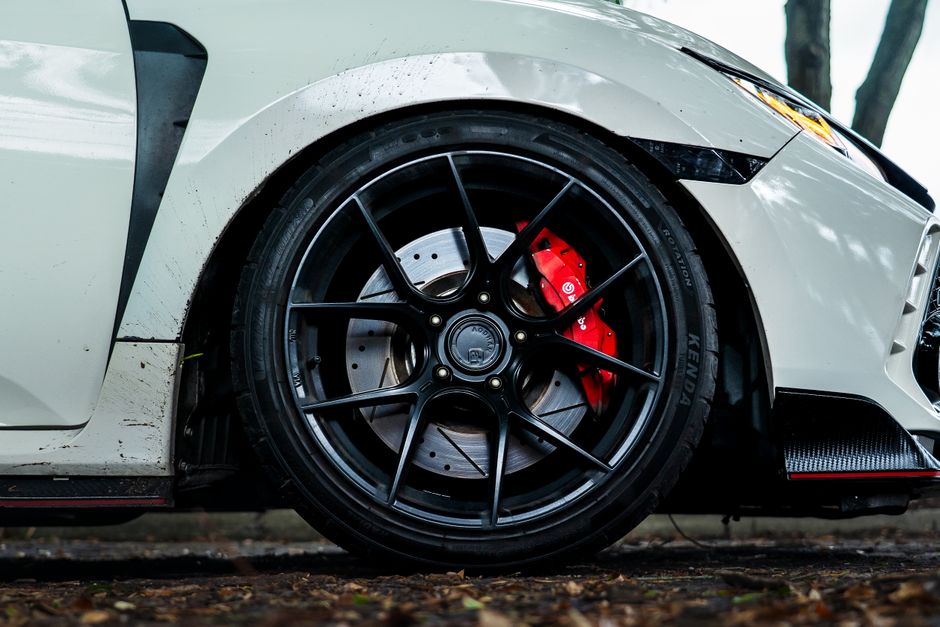
Because ceramic materials handle heat differently than metal, manufacturers tune each formulation for a specific range of operating temperatures. Premium ceramic pads are engineered to deliver consistent friction across a broad temperature window, from the cold mornings of a Canadian winter to the sustained heat of repeated hard stops.
It is worth understanding that "ceramic" is a broad marketing term. A budget ceramic pad and a premium ceramic pad can differ enormously in friction stability, wear rate, and fade resistance. The formulation matters far more than the label on the box.
How Ceramic Pads Compare to Other Compounds
To judge whether ceramic is right for you, it helps to see how the three main pad categories stack up.

- Organic pads: Made from fibres, rubber, glass, and resins. Quiet and rotor-friendly, but they wear quickly and fade under heavy use. Rare on modern vehicles.
- Semi-metallic pads: Contain 30–65% metal by weight. Excellent heat handling and strong initial bite, but noisier, dustier, and harder on rotors.
- Ceramic pads: Quieter, cleaner, and gentler on rotors, with stable performance across a wide temperature range. Typically lower dust, though some formulations trade a little cold-weather bite for refinement.
The practical trade-offs are straightforward. Semi-metallic pads generally offer superior performance in extreme conditions such as track driving or heavy towing, while ceramics favour daily driving comfort, low maintenance, and long rotor life. For most Canadian commuters and family vehicles, ceramic pads hit the sweet spot — and if you want to dig deeper into rotor design, our slotted brake rotors guide is a useful companion read.
Why Ceramic Pads Suit Canadian Driving
Canada presents a challenging environment for braking systems. Drivers deal with road salt, grit, freeze-thaw cycles, and long winters where brakes may sit idle overnight and then be asked to perform immediately in sub-zero temperatures.

Ceramic pads offer several advantages in this context:
- Lower dust: Reduced brake dust means cleaner wheels and less corrosive buildup on alloy rims, which is especially valuable where road salt already attacks metal surfaces.
- Quieter operation: Ceramic formulations tend to suppress the squeal and groan that many drivers associate with winter braking.
- Rotor friendliness: Ceramic pads are generally easier on rotors than semi-metallic compounds, which can extend the life of expensive discs. This pairs well with quality cross-drilled rotors that are designed for heat dissipation.
- Consistent feel: Once warmed, ceramic pads deliver predictable, linear braking that builds driver confidence in mixed conditions.
One honest caveat: in extreme cold, some ceramic pads can feel slightly less aggressive on the very first stop of the day until they build a little heat. Premium formulations largely minimize this, but it is something to be aware of if you live in a region with severe winter temperatures.
Ceramic Pads for Trucks, Sports Cars, and Daily Drivers
Ceramic pads are not a one-size-fits-all answer, and the right choice depends on how you use your vehicle.
Daily Drivers and Family Vehicles
For sedans, SUVs, and crossovers used primarily for commuting and errands, ceramic pads are an excellent default. They keep wheels cleaner, reduce noise, and provide long service life with modest rotor wear.
Light Trucks and Towing
If you regularly tow a trailer or carry heavy loads, braking demands rise sharply. Ceramic pads can work well for light-duty use, but for consistent heavy towing, a high-quality semi-metallic or specifically engineered heavy-duty compound may be a better match. The key is matching the pad to the actual load and terrain you encounter — the same principle that guides our best rotors for towing recommendations for Canadian drivers.
Sports Cars and Enthusiasts
Performance driving generates serious heat. Many enthusiasts choose ceramic pads for street use and switch to track-focused compounds for circuit days. If you want upgraded street performance, pairing ceramic pads with high-quality disc brake kits and drilled or slotted rotors can deliver excellent real-world results without the noise and dust penalties of race compounds.
Regardless of vehicle type, the foundation matters. Rotors, calipers, fluid, and lines all influence how a pad performs. A premium ceramic pad on a worn, warped rotor will never feel right.
Choosing and Installing Ceramic Brake Pads in Canada
When shopping for ceramic pads, focus on formulation quality and correct fitment rather than price alone. Here is a practical checklist:
- Confirm fitment: Match pads to your exact make, model, and year. Brake hardware varies significantly even within a single model line.
- Check the friction rating: Look for the edge code on the pad. Higher letters indicate better friction performance in standardized testing.
- Consider the full system: New pads on old rotors often lead to noise and uneven wear. Replacing rotors at the same time is frequently the smarter long-term decision, as outlined in our performance brake upgrade guide.
- Use quality hardware: Shims, clips, and anti-rattle springs reduce noise. Do not skip them.
- Follow proper break-in: Most ceramic pads benefit from a bedding procedure that transfers an even layer of friction material onto the rotor.
- Inspect fluid and lines: Fresh brake fluid and sound flex lines are essential for safe stopping.
For Canadian buyers, sourcing parts domestically has real advantages: faster shipping, no customs surprises, and pricing with sales tax already included. Companies like DBC Brakes specialize in performance-oriented brake components for cars, trucks, and sports cars across the country, which makes it easier to find parts matched to your driving needs.
Driving safely in Canada demands brakes you can trust. Whether you are commuting through winter slush or carving through summer mountain roads, the right pad compound and quality rotors make the difference between merely stopping and stopping with confidence.
Regular physical activity and general fitness support the reaction times and alertness that safe driving requires. Organizations such as the American College of Sports Medicine emphasize the broader benefits of an active lifestyle, and while that is a health point rather than a braking one, it is a reminder that vehicle maintenance and driver readiness go hand in hand.
Common Questions About Ceramic Brake Pads
Do ceramic pads wear out faster? Not necessarily. Wear depends on formulation, driving style, and vehicle weight. Quality ceramic pads often last as long as or longer than semi-metallic alternatives in normal driving.
Are ceramic pads noisy? Generally, they are the quietest option available when installed correctly with proper hardware.
Can I put ceramic pads on any vehicle? Physically, yes, if the fitment matches. Practically, the right choice depends on your driving conditions and load. Heavy towing or track use may call for a different compound.
Do ceramic pads work in winter? Yes. They perform reliably in cold weather. Just be aware that the first few stops on a very cold morning may feel slightly different until the pads build heat.
Conclusion
Ceramic brake pads are a smart, practical choice for a large share of Canadian drivers. They reduce dust, quiet the ride, treat rotors gently, and deliver stable, predictable braking across a wide range of temperatures. For commuters, family vehicles, and many sports car owners, they represent an excellent balance of comfort, durability, and performance.
The deciding factor is not the label, but the quality of the formulation and the health of the entire braking system. Pair good ceramic pads with well-made rotors and hardware, install them correctly, and bed them in properly, and you will enjoy confident, clean, quiet stopping for thousands of kilometres. If you are ready to upgrade, take the time to match your parts to your vehicle and your driving style. Your brakes are the single most important safety system on your car, and they deserve that level of attention.